
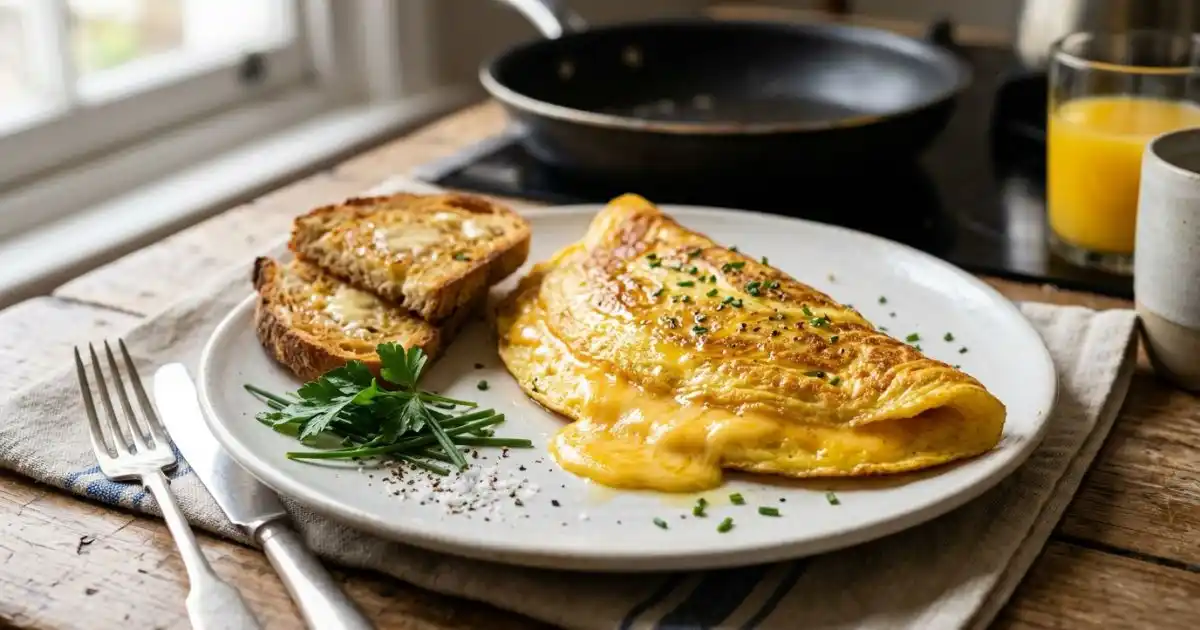
Perfect Cheese Omelette Recipe: Fluffy, Silky & Ready in 5 Minutes
Craving a quick breakfast that actually tastes restaurant-quality? This cheese omelette recipe gives you soft, fluffy eggs with perfectly melted cheese in just 5 minutes. No complicated steps, no dry or rubbery texture, and no broken folds in the skillet. With a simple low-heat method and a few kitchen tricks, you will learn exactly how to make a cheese omelet that turns out buttery, silky, and packed with flavor every single time.
I used to think making a restaurant-quality omelette required 20 years of chef training, but after mastering the ’10-second curd’ technique, I realized it’s all about the rhythm of the pan. Here is the exact method I use every morning to get that silky, buttery result at home.
Table of Contents
Why This Is the Best Cheese Omelette Recipe
A good omelette should be soft, fluffy, and rich with melted cheese inside. This easy cheese omelette delivers all of that in only a few minutes while keeping the cooking process simple and stress-free.
Here is what makes this cheese omelette recipe different from basic egg recipes:
- The eggs stay silky instead of dry because they cook over gentle heat.
- The whisking method adds air into the eggs for a fluffy omelette texture.
- The 10 to 15-second curd technique helps the folded egg cook evenly without becoming rubbery.
- A nonstick skillet keeps the omelette smooth and easy to fold.
- Freshly shredded cheese melts faster and creates a creamy center.
- The recipe works for breakfast, brunch ideas, or a quick protein-rich breakfast before work.
Many people think making a restaurant-style omelette is difficult. In reality, the secret comes down to heat control, timing, and the right folding method. Once you learn these small details, you can make a perfect cheese omelet at home whenever you want.
The Science of the Perfect Omelette
Making a fluffy cheese omelette is not about luck. A few small cooking details change the texture completely. When the eggs cook gently and the cheese melts at the right moment, the omelette becomes soft, silky, and rich instead of dry or rubbery.
Why Temperature Control Matters
One of the biggest mistakes people make is using heat that is too high. Fast cooking may seem easier, but it causes the eggs to tighten too quickly. This creates a dry texture and brown spots on the surface.
For the best cheese omelette recipe, cook the eggs over medium-low heat in a nonstick skillet with melted butter. Gentle heat allows the whisked eggs to form soft curds slowly while keeping moisture inside.
The eggs should still look slightly glossy when you fold the omelette. The remaining heat finishes the cooking naturally after the fold.
The Whisking Secret for Fluffy Eggs
Air is what gives an omelette its fluffy texture. That is why whisking matters so much.
Beat the eggs until the mixture becomes smooth, pale yellow, and slightly bubbly. This step adds tiny air pockets into the eggs, helping them puff lightly while cooking.
For even better texture:
- Use room-temperature eggs when possible.
- Whisk for about 30 to 45 seconds instead of only a few quick stirs.
- Add a small pinch of salt before cooking so the eggs stay tender.
These simple techniques help create silky eggs with a soft, folded center and perfectly melted cheddar or your favorite cheese inside.
Ingredients You’ll Need
This easy cheese omelette recipe uses simple ingredients, but each one plays an important role in the final texture and flavor. Fresh ingredients and proper preparation make a noticeable difference.
Eggs
Use 2 to 3 large eggs for one fluffy omelette.
Fresh eggs create a softer texture and better color. If possible, let the eggs sit at room temperature for about 10 minutes before whisking. Cold eggs take longer to cook evenly.
Chef’s Note: Whisk the eggs until slightly frothy and bubbly for lighter, silkier eggs.
Butter
Use 1 tablespoon of real butter.
Butter adds rich flavor and helps the eggs slide smoothly across the nonstick skillet. It also prevents sticking during the fold.
Chef’s Note: Melt the butter gently without letting it brown. Burnt butter can change the flavor of the omelette.
Cheese
Use about 1/3 cup shredded cheese.
Cheddar is the classic choice because it melts well and gives the omelette a rich, savory taste. Gruyère, Swiss, mozzarella, or cream cheese also work beautifully.
Chef’s Note: Freshly shredded cheese melts more smoothly than pre-packaged shredded cheese.
Salt and Black Pepper
A small pinch of salt and freshly ground black pepper bring balance to the eggs and cheese.
Chef’s Note: Add salt directly into the whisked eggs before cooking for a more even flavor throughout the folded egg.
Optional Add-Ins
You can customize your cheese omelet with extra ingredients such as:
- Chopped chives
- Fresh parsley
- Sautéed mushrooms
- Baby spinach
- Diced ham
- Cooked onions
Keep add-ins light so the omelette folds easily without tearing.
Step-by-Step Instructions
This cheese omelette recipe comes together quickly, but the cooking method matters. Follow these steps carefully for fluffy eggs, melted cheese, and a smooth fold without tearing.
Step 1: Prep the Eggs
Crack 2 to 3 large eggs into a bowl. Add a small pinch of salt and black pepper.
Whisk the eggs for 30 to 45 seconds until the mixture becomes smooth, pale yellow, and slightly bubbly. The extra air inside the whisked eggs helps create a fluffy omelette texture.
If you want softer eggs, let the bowl rest for 1 minute before cooking.
Step 2: Heat the Nonstick Skillet
Place an 8-inch nonstick skillet over medium-low heat.
Add 1 tablespoon of melted butter and swirl it gently around the pan. The butter should foam lightly without turning brown.
A clean nonstick skillet is very important. Older scratched pans can cause sticking and make the folded egg tear during cooking.
Step 3: Cook the Eggs Using the Curd Technique
Pour the whisked eggs into the warm skillet.
Let the eggs sit untouched for about 10 to 15 seconds so soft curds begin forming underneath. Once the edges start setting, gently push the cooked egg toward the center with a rubber spatula while tilting the pan slightly.
Allow the uncooked egg to flow into the empty spaces.
Repeat this motion slowly until the eggs are mostly set but still slightly glossy on top.
Do not stir continuously. That creates scrambled eggs instead of a silky omelette.
Step 4: Add the Cheese
Sprinkle the shredded cheese onto one side of the omelette.
Sharp cheddar gives bold flavor, while Gruyère creates a smooth, creamy melt. Mozzarella works well if you like a stretchy cheese pull texture.
Let the cheese warm for about 20 seconds so it begins melting naturally.
Step 5: Fold the Omelette
Slide a spatula carefully under the empty side of the omelette.
Fold it gently over the cheese filling to create the classic half-moon shape. Press lightly to seal the edges without flattening the eggs.
Cook for another 20 to 30 seconds until the cheese melts fully inside.

Step 6: Serve Immediately
Transfer the cheese omelet onto a warm plate.
Finish with chopped chives, parsley, or extra black pepper if desired. Serve immediately while the eggs stay soft and buttery.
Choosing the Right Cheese
The cheese you choose can completely change the flavor and texture of your omelette. Some cheeses melt into a creamy filling, while others give a sharper and richer taste.
For the best cheese omelette recipe, use freshly shredded cheese whenever possible. Fresh cheese melts more smoothly and gives a softer center inside the folded egg.
| Cheese | Flavor | Melting Texture | Best For |
| Sharp Cheddar | Rich and bold | Smooth and creamy | Classic cheese omelette |
| Gruyère | Nutty and buttery | Very silky | Soft French-style omelettes |
| Swiss Cheese | Mild and slightly sweet | Light and creamy | Fluffy breakfast omelettes |
| Mozzarella | Mild and milky | Stretchy and soft | Cheese pull texture |
| Cream Cheese | Rich and tangy | Thick and creamy | Extra creamy filling |
| Pepper Jack | Spicy and savory | Smooth melt | Spicy breakfast variation |
Which Cheese Melts Best in an Omelette?
Gruyère and mozzarella are among the best melting cheeses because they become smooth very quickly without turning oily. Cheddar also melts beautifully while adding a stronger flavor.
If you want a balanced combination of flavor and texture, mix two cheeses together. A blend of cheddar and mozzarella gives both rich taste and creamy melt.
Best Tips for Melting Cheese Properly
- Shred cheese fresh from the block instead of using packaged shredded cheese.
- Add the cheese when the eggs are almost set but still glossy on top.
- Keep the skillet over low heat so the cheese melts gently inside the omelette.
- If needed, place a lid on the skillet for 20 to 30 seconds to trap warmth and melt the cheese faster.
The right cheese turns a simple omelet into a rich, buttery breakfast with a soft, melted center in every bite.
Omelette Variations and Add-Ins
One of the best things about a cheese omelette recipe is how easy it is to customize. A few simple ingredients can add extra flavor, texture, and freshness without changing the soft, fluffy texture of the eggs.
The key is to keep fillings light. Too many ingredients can make the omelette heavy and difficult to fold.
Savory Add-Ins
These classic ingredients pair perfectly with melted cheese and silky eggs:
- Sautéed mushrooms
- Baby spinach
- Diced ham
- Cooked veal pieces
- Caramelized onions
- Roasted bell peppers
Cook vegetables before adding them to the omelette so they do not release extra moisture into the eggs.
Fresh Herbs for More Flavor
Fresh herbs add brightness and color to a buttery cheese omelet.
Popular choices include:
- Chopped chives
- Fresh parsley
- Dill
- Basil
Sprinkle herbs on top just before serving for the freshest flavor.
Protein-Packed Omelette Ideas
If you want a more filling protein-rich breakfast, try adding:
- Grilled chicken
- Turkey slices
- Smoked salmon
- Crumbled sausage
Use small amounts so the folded egg keeps its soft texture.
Spicy Cheese Omelette Variation
For extra heat, add:
- Jalapeño slices
- Red chili flakes
- Pepper Jack cheese
- Hot sauce
Spicy fillings work especially well with cheddar or mozzarella.
Mediterranean Style Omelette
For a fresh savory version, combine:
- Feta cheese
- Spinach
- Tomatoes
- Olives
This variation gives the omelette a lighter and slightly tangy flavor.
Breakfast Pairing Ideas
Serve your fluffy omelette with simple breakfast sides such as:
- Buttered toast
- Crispy hash browns
- Fresh fruit
- Avocado slices
- Roasted potatoes
These sides turn a quick omelet into a full breakfast or brunch plate.
Troubleshooting: How to Avoid a Rubbery Omelette
Even a simple cheese omelette recipe can go wrong if the heat or timing is off. The good news is that most omelette problems are easy to fix once you know what causes them.
Here are the most common mistakes and how to avoid them.
Why Did My Omelette Turn Out Rubbery?
Rubbery eggs usually happen because the skillet is too hot or the eggs cook for too long.
Eggs continue cooking from leftover heat even after leaving the pan. If you wait until the omelette looks completely firm before serving, the texture can quickly become dry and chewy.
Fix:
- Use medium-low heat only.
- Remove the omelette while the eggs still look slightly glossy.
- Avoid overcooking after folding.
Soft eggs create the silky texture found in restaurant-style omelettes.
Why Did My Omelette Tear While Folding?
Tearing often happens when the omelette is overfilled or stuck to the pan.
Heavy fillings make the folded egg harder to lift smoothly. Older pans with scratches can also cause sticking.
Fix:
- Use a clean nonstick skillet.
- Keep fillings light and evenly spread.
- Slide the spatula fully underneath before folding.
A flexible rubber spatula usually works best for smooth folding.
Why Is My Cheese Not Melting Properly?
Cold cheese or high heat can stop the cheese from melting evenly inside the omelette.
Large chunks of cheese also take longer to soften.
Fix:
- Use freshly shredded cheese.
- Add cheese while the eggs are still warm and slightly glossy.
- Cover the skillet with a lid for about 20 to 30 seconds after folding.
This traps warmth inside the pan and helps the cheese melt fully.
Why Did My Omelette Stick to the Pan?
Sticking usually means the skillet was not prepared properly or the heat was too strong.
Fix:
- Always preheat the nonstick skillet gently.
- Coat the pan evenly with melted butter.
- Avoid cooking over high heat.
A smooth nonstick surface makes a huge difference when making fluffy omelettes.
Why Does My Omelette Look Flat Instead of Fluffy?
Flat eggs usually mean there was not enough air whisked into the mixture.
Fix:
- Whisk the eggs until bubbly and pale yellow.
- Cook slowly instead of rushing the process.
- Use fresh eggs for better structure.
These small changes help create soft curds and a lighter fluffy omelette texture.

Perfect Cheese Omelette Recipe: Fluffy, Silky & Ready in 5 Minutes
Equipment
- 8-inch nonstick skillet
- Mixing bowl
- Rubber spatula
- Whisk
Ingredients
Omelette
- 2-3 large eggs room temperature if possible
- 1 tbsp butter unsalted preferred
- 1/3 cup shredded cheddar cheese or Gruyère, Swiss, mozzarella, or cream cheese
- 1 pinch salt
- 1 pinch black pepper freshly ground
Optional Add-Ins
- 1 tbsp chopped chives
- 2 tbsp sautéed mushrooms
- 2 tbsp baby spinach
- 2 tbsp diced turkey ham optional
Instructions
- Crack the eggs into a mixing bowl. Add salt and black pepper, then whisk for 30 to 45 seconds until pale yellow, smooth, and slightly frothy.
- Place the nonstick skillet over medium-low heat. Add the butter and swirl gently until melted and lightly foamy without browning.
- Pour the whisked eggs into the skillet. Let them sit untouched for 10 to 15 seconds so soft curds begin forming underneath.
- Using a rubber spatula, gently push the cooked eggs toward the center while tilting the pan so uncooked egg flows into empty spaces. Repeat slowly until the eggs are mostly set but still slightly glossy on top.
- Sprinkle the shredded cheese over one half of the omelette. Let it warm for about 20 seconds until it begins melting naturally.
- Carefully slide the spatula under the empty side of the omelette and fold it gently over the cheese filling to create a half-moon shape.
- Cook for another 20 to 30 seconds until the cheese is fully melted inside.
- Transfer the omelette to a warm plate. Garnish with chopped chives or parsley if desired and serve immediately.
Notes
Frequently Asked Questions
What Is the Secret to a Fluffy Omelette?
The secret to a fluffy omelette is whisking the eggs until bubbly and cooking them slowly over medium-low heat. Air trapped inside the whisked eggs creates a lighter texture, while gentle cooking keeps the eggs soft and silky.
Using fresh eggs and a nonstick skillet also helps create soft curds without overcooking.
Which Cheese Melts Best in an Omelette?
Gruyère and mozzarella melt very smoothly and create a creamy filling. Sharp cheddar is also a great choice because it gives a stronger flavor while still melting well.
Freshly shredded cheese melts more evenly than packaged shredded cheese.
How Do You Fold an Omelette Without It Tearing?
A soft fold starts with the right pan and the right amount of filling.
To prevent tearing:
Use a clean nonstick skillet
Keep fillings light
Let the eggs set before folding
Slide the spatula completely underneath the omelette
Fold gently instead of pressing down hard.
Can I Reheat a Cheese Omelette?
yes, A cheese omelette can be reheated, but gentle heat works best to keep the eggs soft.
For the best texture:
Place the omelette in an oven at 325°F
Heat for about 5 to 8 minutes
Cover loosely with foil to prevent drying
Microwaving works faster, but the eggs may become slightly firmer.
Why Did My Omelette Turn Out Rubbery?
Rubbery eggs are usually caused by high heat or overcooking. Eggs cook quickly, and leftover heat continues cooking them after leaving the skillet.
Remove the omelette while the center still looks slightly glossy for a softer texture.
Do I Need Milk in My Eggs?
Milk is optional. Some people like the richer taste, but too much milk can make the eggs heavier.
A small splash of water often creates a lighter, fluffier omelette because steam forms during cooking.
Can I Use an Omelette Pan for Scrambled Eggs?
Yes. An omelette pan works great for scrambled eggs because the nonstick surface helps the eggs cook evenly without sticking.
Is a Stainless Steel Pan Okay for an Omelette?
Yes, but eggs can stick more easily. Use enough butter, medium-low heat, and let the eggs release naturally before folding.
Have you given our recipe a try ?
There are no reviews yet. Be the first one to write one.
Last Updated on May 16, 2026 by Janelle
