
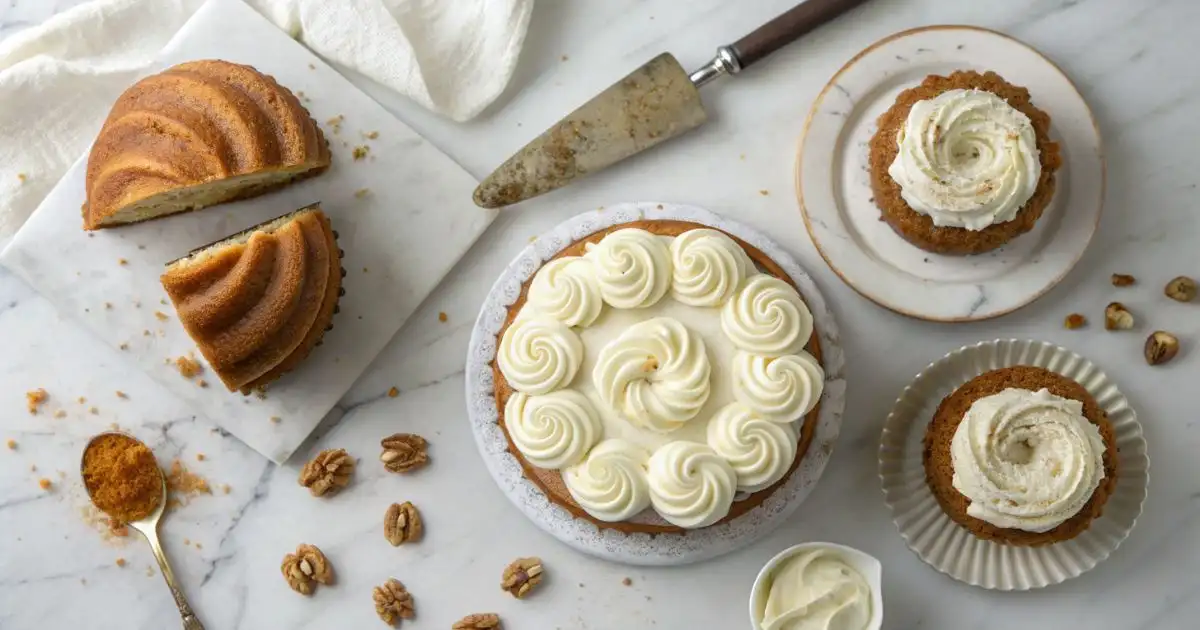
The Ultimate Cream Cheese Frosting Guide: 3 Foolproof Ways
Cream cheese frosting is one of the most beloved toppings in all of baking, that signature tangy, silky richness that transforms a slice of carrot cake or a fluffy red velvet cupcake from “good” to “unforgettable.” And yet, it’s also one of the most frustrating. Too runny. Too lumpy. Slides right off the cake.
If you’ve ever ended up with a soupy mess instead of that lush, cloud-like swirl you envisioned, you are absolutely not alone. The problem isn’t you; it’s that most recipes skip the why behind the method. Get that wrong, and your frosting fights you every step of the way.
This master guide replaces four separate articles and gives you the only three cream cheese frosting recipes you will ever need. Whether you’re hunting for a stable cream cheese frosting sturdy enough to pipe onto layer cakes, a light-as-air whipped version for summer cupcakes, or a silky cream cheese glaze that cascades down a warm bundt cake, you’ll find it here, along with the science, the troubleshooting, and the flavor variations to make it your own.
Let’s frost something beautiful.
Table of Contents
Cheat Sheet: Which Frosting Should You Make?
Not sure where to start? Use this quick comparison to find your match before diving into the recipes.
| Method 1: Classic Pipeable | Method 2: Cloud Whipped | Method 3: Pourable Glaze | |
| Texture | Dense, creamy, sturdy | Airy, light, mousse-like | Thin, glossy, fluid |
| Best For | Carrot cake, red velvet, layer cakes | Cupcakes, summer desserts, sheet cakes | Bundt cakes, cinnamon rolls, danishes |
| Holds Shape? | Yes — excellent for pipeable frosting | Yes, with heavy cream — great for rosettes | No — designed to drip and set |
| Difficulty | ⭐⭐ Intermediate | ⭐⭐ Intermediate | ⭐ Easy |
| Key Ingredients | Cream cheese + butter + powdered sugar | Cream cheese + heavy whipping cream | Cream cheese + milk + powdered sugar |
| Serves as | Classic celebration frosting | 3 ingredient frosting (with Cool Whip shortcut) | Glaze/drizzle |
| Sweetness Level | Medium-high | Medium | Medium (adjustable) |
Quick Pick Guide:
- Decorating a tiered cake tonight? → Method 1
- Making cupcakes for a summer party? → Method 2
- Pouring over a fresh-from-the-oven bundt? → Method 3
The Golden Rules of Cream Cheese Frosting
Before you open a single package, internalize these two rules. They are the reason most frostings fail, and why yours won’t.
Rule #1: Temperature Is Everything (And It’s Counterintuitive)
This is the single most important concept in this entire guide. Write it on a sticky note and put it on your mixer:
Your butter must be soft. Your cream cheese must be cold (or cool room temperature).
Here’s the science: Cream cheese is an emulsified dairy product held together by proteins and fat. When it gets too warm, above about 65–70°F, those fat molecules break down their emulsified structure, and the protein network loses its cohesion. The result? A greasy, liquid mess that no amount of extra powdered sugar will fully rescue.
Butter, on the other hand, needs to be at true room temperature (68–72°F) so it can be whipped into a light, aerated base. Cold butter won’t cream properly and leaves behind lumps. Melted or overly warm butter collapses the entire mixture.
Rule #2: Full-Fat Block Cream Cheese Only, No Tubs, No Exceptions
This rule is non-negotiable if you want stable cream cheese frosting.
Block cream cheese (the kind sold in foil-wrapped 8-oz packages) has a lower moisture content and a firmer fat structure. It holds its shape, emulsifies beautifully with butter, and gives you that dense, tangy richness.
Spreadable cream cheese in tubs has added stabilizers and extra water to keep it soft at refrigerator temperatures. That extra moisture is a frosting killer; it turns your batch runny before you’ve even finished mixing.
The same applies to low-fat or Neufchâtel varieties: the altered fat-to-water ratio makes a reliable, stable frosting nearly impossible to achieve.
Buy the brick. Always.
Method 1: The Classic Pipeable Frosting (Butter + Cream Cheese)
Overview
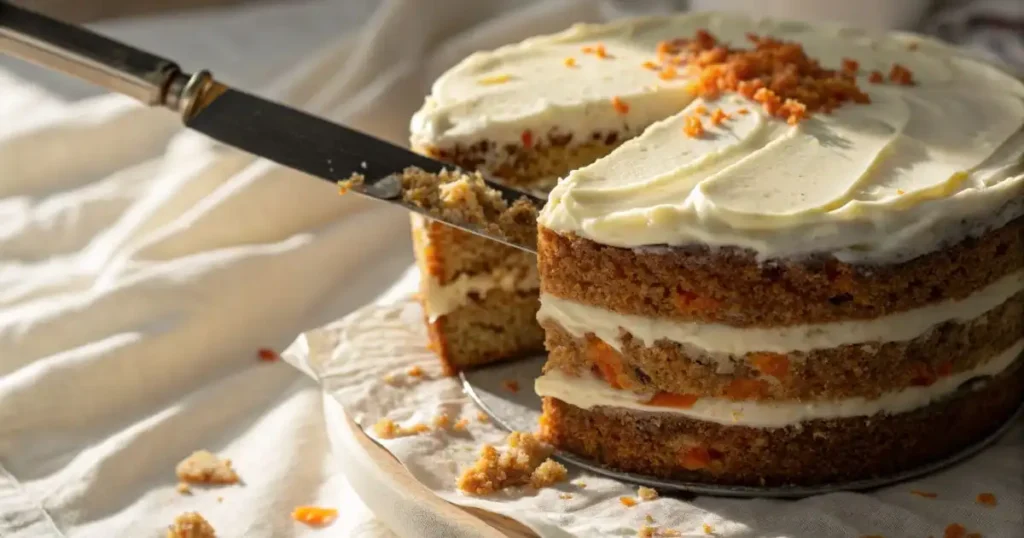
This is the gold-standard pipeable frosting, the one you see swooped high on a three-layer carrot cake or piped into dramatic rosettes on a red velvet sheet cake. It has structure, body, and that signature tang balanced by rich, buttery sweetness. It’s not the lightest frosting in this guide, but it is the most reliable for decorated bakes.
Best For: Carrot cake, red velvet cake, hummingbird cake, layer cakes, naked cakes, and frosted sugar cookies.
Yield: About 3 cups (enough to frost a 2-layer 9-inch cake or 24 cupcakes)
Ingredients
| Ingredient | Amount | Notes |
| Full-fat block cream cheese | 8 oz (1 package) | Cool — 15 min out of fridge |
| Unsalted butter | ½ cup (1 stick / 113g) | True soft room temperature |
| Powdered sugar (sifted) | 3–3½ cups (360–420g) | Sift to prevent lumps |
| Pure vanilla extract | 1½ tsp | High quality matters here |
| Pinch of fine sea salt | ⅛ tsp | Balances sweetness |
Instructions
Step 1: Beat the butter alone first. Place your soft butter in the bowl of a stand mixer fitted with the paddle attachment (or use a hand mixer). Beat on medium-high for 2–3 full minutes until it is pale, fluffy, and visibly lightened in color. Don’t skip this step; this is where you build the airy structure that the frosting depends on.
Step 2: Add the cream cheese in chunks. Cut your cool cream cheese into 6–8 pieces. With the mixer on medium, add the pieces one at a time, allowing each piece to incorporate before adding the next. Once all the cream cheese is in, beat for 1 minute until smooth. Do not beat excessively at this stage.
Step 3: Add vanilla and salt. Add the vanilla and salt and mix on low until combined.
Step 4: Add the powdered sugar gradually. With the mixer on the lowest speed, add the sifted powdered sugar ½ cup at a time. Once all the sugar is incorporated, increase to medium and beat for 1–2 minutes until light and fluffy.
Step 5: Taste and adjust. Want it tangier? Use slightly less sugar. Want a stiffer frosting for intricate piping? Add the extra ½ cup of powdered sugar. Need it just a touch looser for spreading? A single teaspoon of heavy cream will do the job.
Step 6: Use immediately or refrigerate. Classic pipeable frosting can be used right away, it will be at its best consistency. If you need to make it ahead, press plastic wrap directly onto the surface and refrigerate for up to 3 days. Re-whip briefly before using.
Pro Tips for Structure
- For a stiffer piping consistency, chill the finished frosting for 20 minutes before loading your piping bag. The slight re-firming makes detailed work dramatically easier.
- For frosting a layer cake, apply a thin crumb coat, chill for 15 minutes, then apply the final coat. Cream cheese frosting doesn’t crust over like American buttercream, so this step matters.
- Add 1 tablespoon of cornstarch to the powdered sugar if you need the frosting to hold up in a warm environment (see Troubleshooting below).
This is perfect for our [Pineapple Cream Cheese Pound Cake].
Classic Pipeable Cream Cheese Frosting
Equipment
- Stand mixer with paddle attachment
- Mixing bowl
- Hand mixer (optional)
- Rubber spatula
- Piping bag (optional)
Ingredients
Frosting
- 8 oz full-fat block cream cheese cool, about 15 minutes out of the refrigerator
- 1/2 cup unsalted butter soft room temperature
- 3 cups powdered sugar sifted to prevent lumps (use up to 3 1/2 cups for stiffer frosting)
- 1.5 tsp pure vanilla extract use high-quality extract
- 1/8 tsp fine sea salt balances sweetness
Instructions
- Place the softened butter in the bowl of a stand mixer fitted with the paddle attachment. Beat on medium-high speed for 2–3 minutes until the butter becomes pale, fluffy, and noticeably lighter in color. This step creates the airy base structure of the frosting.
- Cut the cream cheese into 6–8 chunks. With the mixer on medium speed, add the pieces one at a time, allowing each piece to incorporate before adding the next. Once fully added, beat for about 1 minute until smooth. Avoid overbeating.
- Add the vanilla extract and fine sea salt. Mix on low speed until fully combined.
- Gradually add the sifted powdered sugar, about 1/2 cup at a time, with the mixer on the lowest speed to prevent a sugar cloud. After all the sugar is incorporated, increase the speed to medium and beat for 1–2 minutes until the frosting becomes light and fluffy.
- Taste and adjust the consistency if needed. For tangier frosting, reduce the sugar slightly. For firmer piping consistency, add up to an extra 1/2 cup powdered sugar. For a softer spreadable frosting, mix in a teaspoon of heavy cream.
- Use the frosting immediately for best texture. If preparing ahead, press plastic wrap directly onto the surface and refrigerate for up to 3 days. Re-whip briefly before using.
Notes
Method 2: The “Cloud” Whipped Frosting (Stable & Light)
Overview
If classic cream cheese frosting is a lush velvet settee, this version is a cumulus cloud. It’s dramatically lighter, airier, and far less sweet, perfect for summer desserts, delicate cupcakes, or anyone who finds traditional cream cheese frosting a touch too rich. The secret is heavy whipping cream, which, when whipped to stiff peaks and folded in, creates a mousse-like structure that is both light and surprisingly stable.
This recipe also satisfies the 3 ingredient frosting search intent with its ultra-simple Cool Whip shortcut (see below).
Best For: Cupcakes, summer layer cakes, icebox cakes, parfaits, fruit tarts, banana pudding toppings.
Yield: About 4 cups (enough to generously frost 24 cupcakes)
Ingredients
| Ingredient | Amount | Notes |
| Full-fat block cream cheese | 8 oz (1 package) | Cool room temperature |
| Powdered sugar (sifted) | 1–1½ cups (120–180g) | Less than classic — the cream adds volume |
| Heavy whipping cream | 1 cup (240ml) | Must be very cold straight from fridge |
| Pure vanilla extract | 1 tsp | |
| Pinch of fine sea salt | ⅛ tsp |
Instructions
Step 1: Whip the cream first. In a clean, chilled bowl, beat the cold heavy whipping cream with ½ tsp of the vanilla extract on medium-high until stiff peaks form (the cream holds its shape when you lift the beater). Transfer to a separate bowl and refrigerate.
Why cold matters: Cream only whips properly when cold. Warm cream breaks into buttery clumps. A chilled bowl speeds the process and gives you more stable peaks.
Step 2: Beat the cream cheese. In your now-empty mixing bowl, beat the cool cream cheese on medium until completely smooth, about 1 minute. Scrape down the sides.
Step 3: Add sugar, vanilla, and salt. Mix in the powdered sugar ½ cup at a time, followed by the remaining vanilla and salt. Beat until light and fluffy.
Step 4: Fold in the whipped cream. Remove the bowl from the mixer. Add the whipped cream in two additions, folding gently with a rubber spatula using a figure-eight motion. You want to preserve as much of that airy volume as possible. A few small streaks are fine; over-folding deflates the frosting.
Step 5: Chill before piping. Refrigerate the finished frosting for 20–30 minutes. This short rest firms it up beautifully and makes it far easier to pipe into clean swirls. It will keep in the fridge for up to 48 hours.
The 3-Ingredient Cool Whip Shortcut
Short on time or equipment? This simplified version delivers a remarkably good result with minimal effort and satisfies the 3-ingredient frosting intent perfectly:
- 8 oz block cream cheese, softened slightly
- 1 cup powdered sugar
- 8 oz Cool Whip (thawed), or another whipped topping
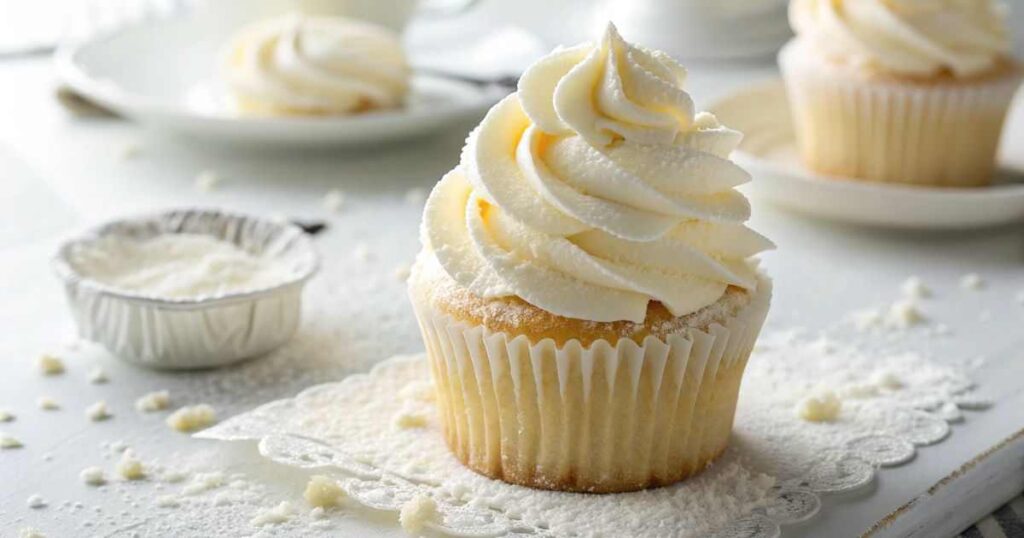
Beat the cream cheese and powdered sugar until smooth, then fold in the Cool Whip until just combined. Refrigerate 20 minutes before using. Note: this version is softer and won’t hold as firm a piped shape, but it’s incredibly easy and crowd-pleasing.

Cloud Whipped Cream Cheese Frosting
Equipment
- Stand mixer or hand mixer
- Mixing bowls
- Rubber spatula
- Whisk or mixer beaters
- Piping bag (optional)
Ingredients
Whipped Frosting
- 8 oz full-fat block cream cheese cool room temperature
- 1-1.5 cups powdered sugar sifted
- 1 cup heavy whipping cream very cold straight from the refrigerator
- 1 tsp pure vanilla extract
- 1/8 tsp fine sea salt
3-Ingredient Shortcut Version
- 8 oz block cream cheese slightly softened
- 1 cup powdered sugar
- 8 oz whipped topping thawed (such as Cool Whip or similar whipped topping)
Instructions
- In a clean, chilled mixing bowl, whip the cold heavy whipping cream with 1/2 teaspoon of the vanilla extract using a mixer on medium-high speed until stiff peaks form. Transfer the whipped cream to a separate bowl and refrigerate.
- In the empty mixing bowl, beat the cream cheese on medium speed for about 1 minute until completely smooth. Scrape down the sides of the bowl.
- Add the powdered sugar gradually, about 1/2 cup at a time. Mix in the remaining vanilla extract and the pinch of sea salt. Beat until the mixture is smooth and fluffy.
- Remove the bowl from the mixer. Gently fold the whipped cream into the cream cheese mixture in two additions using a rubber spatula. Use a light figure-eight motion to keep the mixture airy and fluffy.
- Refrigerate the finished frosting for 20–30 minutes before piping or spreading. This helps it firm up and hold its shape.
- For the shortcut version, beat the cream cheese and powdered sugar until smooth, then gently fold in the whipped topping until just combined. Chill for 20 minutes before using.
Notes
Method 3: The Pourable Cream Cheese Glaze
Overview
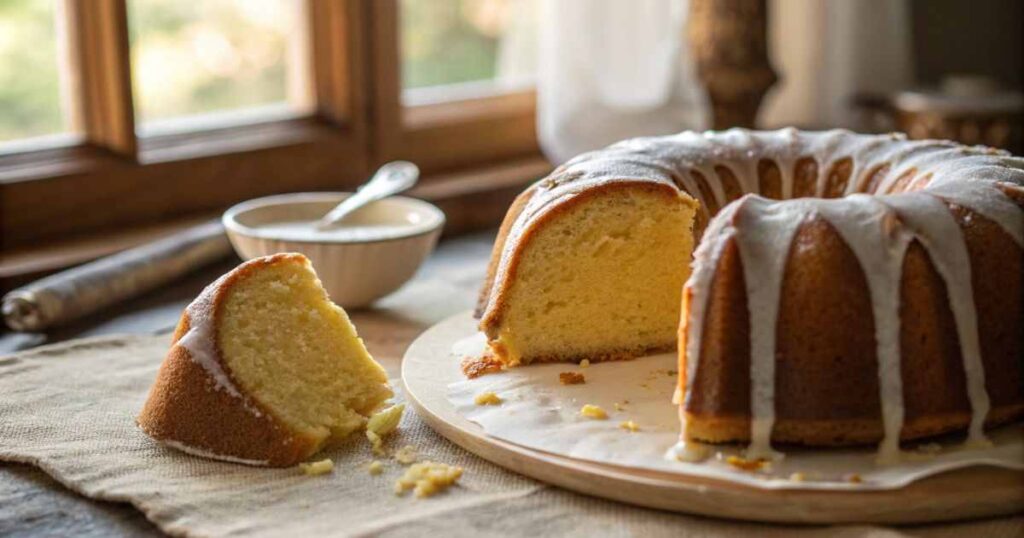
This is the simplest recipe in the guide and one of the most dramatic in effect. A cream cheese glaze poured over a warm bundt cake pools into every crevice, sets to a glossy, slightly firm finish, and delivers that irresistible tangy sweetness in every bite. Unlike the first two methods, this isn’t designed to hold a shape; it’s designed to flow.
Best For: Bundt cakes, pound cakes, cinnamon rolls, sticky buns, danishes, quick breads, coffee cakes.
Yield: About 1 cup (enough to glaze one standard 10-cup bundt cake or 12 cinnamon rolls)
Ingredients
| Ingredient | Amount | Notes |
| Full-fat block cream cheese | 4 oz (half a package) | Softened — 30 min at room temperature |
| Powdered sugar (sifted) | 1–1½ cups (120–180g) | Start with 1 cup, add more to thicken |
| Milk (or heavy cream) | 3–5 tablespoons | Add gradually to reach desired consistency |
| Pure vanilla extract | ½ tsp | |
| Pinch of fine sea salt | small pinch |
Instructions
Step 1: Soften the cream cheese fully. Unlike the previous two methods, this recipe requires fully softened cream cheese; you want it almost spreadable. Let it sit at room temperature for 30 minutes, or microwave in 10-second bursts until very soft (but not melted).
Step 2: Beat until smooth. Beat the cream cheese until completely lump-free. Any lumps now will survive the thinning process and leave an uneven glaze.
Step 3: Add sugar and vanilla. Mix in the sifted powdered sugar and vanilla, beating until smooth and thick.
Step 4: Thin with milk gradually. Add milk one tablespoon at a time, beating after each addition. Watch the consistency carefully:
- 2–3 tbsp → Thick, spreadable glaze (good for cinnamon rolls)
- 4–5 tbsp → Pourable, ribbon-like glaze (ideal for bundt cakes)
- 6+ tbsp → Very thin drizzle (best for danishes or drizzling over pastries)
Step 5: Pour immediately. Cream cheese glaze thickens as it sits. If you’ve made it ahead, whisk in another teaspoon of milk to loosen before pouring. For the most dramatic drip effect on a bundt, pour while the cake is still slightly warm, the glaze will flow into every ridge and set with a beautiful glossy finish.
Making It Ahead
The glaze can be stored in an airtight container in the refrigerator for up to 5 days. Reheat in 10-second microwave bursts or let sit at room temperature, then whisk in a splash of milk to restore the pourable consistency.
Drizzle this over our [Cream Cheese Danish] recipe.
Pourable Cream Cheese Glaze
Equipment
- Mixing bowl
- Hand mixer or whisk
- Rubber spatula
Ingredients
Cream Cheese Glaze
- 4 oz full-fat block cream cheese softened for about 30 minutes
- 1 cup powdered sugar sifted, add up to 1 1/2 cups for a thicker glaze
- 3-5 tbsp milk or heavy cream add gradually to reach desired consistency
- 1/2 tsp pure vanilla extract
- 1 pinch fine sea salt
Instructions
- Allow the cream cheese to soften at room temperature for about 30 minutes until very soft and spreadable. If needed, microwave in short 10-second bursts until soft but not melted.
- Beat the softened cream cheese in a mixing bowl until completely smooth and free of lumps.
- Add the sifted powdered sugar and vanilla extract. Beat until the mixture becomes thick, smooth, and fully combined.
- Slowly add the milk or cream one tablespoon at a time, mixing well after each addition, until the glaze reaches your desired consistency.
- For a thick glaze suitable for cinnamon rolls, use about 2–3 tablespoons of milk. For a smooth pourable glaze ideal for bundt cakes, use about 4–5 tablespoons.
- Pour the glaze immediately over cakes or pastries. For a dramatic bundt cake finish, pour while the cake is still slightly warm so the glaze flows into every ridge.
Notes
Troubleshooting: Why Is My Frosting Runny?
You’ve ended up with a droopy, soupy frosting. Here are the three most likely causes, and the three specific ways to fix it.
Cause 1: Your Cream Cheese Was Too Warm
The fix: Stop mixing immediately. Overworking warm cream cheese makes it progressively worse. Transfer the frosting to a bowl, press plastic wrap directly onto the surface, and refrigerate for 30–45 minutes. Then re-whip gently on low speed. In most cases, this alone will rescue it.
If the frosting is so loose it looks broken (greasy, with separated liquid pooling), chill it until very firm, then re-beat slowly.
Cause 2: Too Much Liquid or Not Enough Sugar
The fix: Powdered Sugar Method: Add powdered sugar one tablespoon at a time, mixing on low, until you reach the desired consistency. Note that this also increases sweetness, so taste as you go. For a 2-cup batch of frosting, you rarely need more than 2–3 extra tablespoons to make a meaningful difference.
The fix: Cornstarch Method (for stable cream cheese frosting in warm conditions): Whisk 1–2 tablespoons of cornstarch directly into your powdered sugar before adding it to the mixer. Cornstarch absorbs excess moisture without adding additional sweetness and is particularly effective if you live in a humid climate or are frosting a cake that will sit at room temperature for several hours. This is a professional baker’s trick and one of the best-kept secrets for achieving truly stable cream cheese frosting.
Cause 3: You Used Tub Cream Cheese or Low-Fat Cream Cheese
The fix: Unfortunately, there is no great fix here; the excess moisture is now in the frosting. Your best option is to compensate aggressively with extra powdered sugar and cornstarch, then keep the frosted dessert refrigerated until the moment it’s served. For future batches: always use full-fat block cream cheese.
Quick Reference Fix Chart
| Problem | Fastest Fix |
| Slightly soft, not holding shape | Refrigerate 30 min, then re-whip |
| Too sweet from added sugar | Squeeze of fresh lemon juice balances it |
| Lumpy | Room temp cream cheese + more beating |
| Weeping liquid | Cornstarch (1 tbsp) + refrigerate |
| Too stiff to spread | 1 tsp heavy cream at a time |
Flavor Variations: Beyond Vanilla
Once you’ve mastered the base recipes, these flavor additions open up a world of possibilities. Each can be applied to any of the three methods above, simply fold in at the end of mixing.
Lemon Cream Cheese Frosting
Add the zest of 1 large lemon and 1–2 tablespoons of fresh lemon juice to any base recipe. Bright, floral, and tangy, extraordinary on lemon poppy seed cake, blueberry cake, or lavender cupcakes. For a more pronounced citrus hit, substitute lemon extract (¼ tsp) for the vanilla.
Strawberry Cream Cheese Frosting
Fold in 3–4 tablespoons of freeze-dried strawberry powder (not fresh strawberries, the water content is too high) for a gorgeous blush-pink frosting with intense, natural berry flavor. This works beautifully as a pipeable frosting on vanilla or chocolate cupcakes. Alternatively, use 2–3 tablespoons of seedless strawberry jam for a subtler flavor and a slight swirl effect.
Cinnamon Brown Sugar Cream Cheese Frosting
Replace up to ½ cup of the powdered sugar with brown sugar (sifted to remove lumps) and add 1 teaspoon of cinnamon. A natural on carrot cake, banana cake, or spiced apple cupcakes, it deepens the warmth and adds a subtle caramel note to the classic tang.
Espresso Cream Cheese Frosting
Dissolve 1–2 teaspoons of instant espresso powder in 1 teaspoon of warm water, then beat it into the base recipe. The bitterness of the espresso cuts through the sweetness and creates a sophisticated frosting that is exceptional on a chocolate layer cake or mocha cupcakes.
Brown Butter Cream Cheese Frosting
Brown your butter before using it in Method 1: cook over medium heat until it turns golden and smells nutty, then chill until solid and re-soften to room temperature. The nutty, caramelized depth it adds to the frosting is subtle but utterly transformative, especially for fall bakes.
Conclusion: You’ve Got This
Cream cheese frosting isn’t difficult; it just has rules. And now you know them all.
Keep your cream cheese cool and your butter soft. Use full-fat blocks, always. Don’t overbeat. Chill when in doubt. And match the method to the dessert: the sturdy Classic Pipeable for your celebration layer cakes, the airy Cloud Whipped for your summer cupcakes, and the glossy Pourable Glaze for every bundt and cinnamon roll that deserves to be finished with a cascading ribbon of tangy sweetness.
Whether you’re a weekend baker or someone working toward their first layer cake, these three recipes will carry you through everything. Bookmark this page, scribble in the margins, dog-ear it. Come back when something goes wrong; the troubleshooting section will be here.
Now go make something lush.
Have a question about your frosting? Drop it in the comments below. And if you found this guide helpful, share it with a fellow baker; there’s enough great cream cheese frosting in the world for everyone.
Have you given our recipe a try ?
There are no reviews yet. Be the first one to write one.
Last Updated on March 8, 2026 by Janelle

- The Ultimate Guide to Viral Cottage Cheese Flatbread - February 14, 2026
- The Ultimate Marinated Cheese Recipe (The Best Make-Ahead Appetizer) - January 31, 2026
- Easy Pepper Jelly Cheese Dip Recipe in 5 Minutes - January 18, 2026