
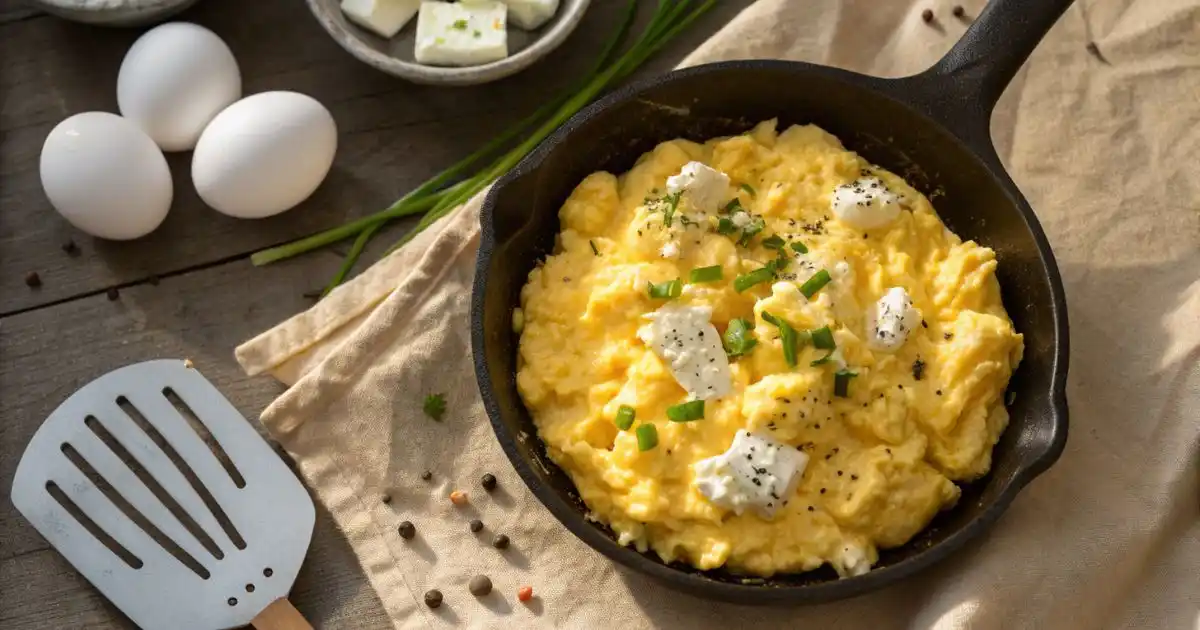
High-Protein Cottage Cheese Eggs (Scrambled & Baked Casserole)
Introduction: The Morning Upgrade You Didn’t Know You Needed
Cottage cheese eggs are quietly revolutionizing the way fitness enthusiasts and breakfast lovers approach their morning protein, and if you’re still making plain scrambled eggs without them, your mornings are missing something extraordinary.
Let’s be brutally honest: plain scrambled eggs have a personality problem. Day after day, the same pale, slightly rubbery ribbons sliding around a pan, no matter how much hot sauce you drown them in, the monotony eventually wins. For those who refuse to sacrifice nutrition for flavor, there is a solution hiding in the dairy aisle that most people walk right past.
Cottage cheese. Specifically, folding full-fat or low-fat cottage cheese directly into your eggs.
This single dairy hack transforms an ordinary morning staple into a velvety, macro-friendly morning feast that packs nearly double the protein of standard scrambled eggs. Whether you prefer a quick stovetop scramble or a batch-cooked cottage cheese egg bake that powers your entire week, this ultimate pillar guide covers everything you need to master both methods from the ground up.
Table of Contents
The Food Science: Why Cottage Cheese Makes Eggs Fluffier
Before you dismiss cottage cheese as a diet food relic, understand why it performs so remarkably well in egg cookery, because the chemistry behind it is genuinely fascinating.
- Moisture becomes your best friend. Cottage cheese carries a significant amount of liquid whey suspended within its curds. The moment those moisture-laden curds hit a heated surface, they flash into steam. That rapid steam generation forces the surrounding egg proteins to puff upward, creating those impossibly large, billowy folds you’ve seen on high-protein breakfast content across the internet. This is the same principle behind French-style scrambled eggs with crème fraîche; the dairy moisture drives the lift.
- Casein protein acts as a structural buffer. Raw eggs, when exposed to high heat, contract their proteins rapidly, expelling moisture and turning that golden morning potential into a dry, squeaky disappointment. Cottage cheese introduces casein, a slow-digesting, heat-tolerant protein, into the mixture. Casein essentially insulates the egg proteins, slowing the coagulation process and keeping the final texture tender, custardy, and yielding rather than tight and rubbery.
- The fat content adds richness without heaviness. The milkfat in cottage cheese coats the protein strands as they set, lending a buttery, almost unctuous mouthfeel to the finished eggs without requiring excessive added butter or cream. The result is a fluffy scrambled eggs experience that feels indulgent while remaining firmly within the macros of a disciplined high-protein breakfast.
Scrambled vs. Baked: Which Method Fits Your Morning?
Not every morning looks the same. Some days call for a five-minute stovetop affair; others demand a Sunday afternoon of meal prep that arms you with breakfasts for the entire week. Use this comparison to identify which cottage cheese eggs method belongs in your current routine.
| Cooking Method | Texture Profile | Total Time | Best Used For |
| Fluffy Scrambled (Stovetop) | Silky, large-curd, cloud-like ribbons with a glossy, barely-set finish | 8–10 minutes | Single-serving mornings, immediate consumption, high-protein breakfasts on busy weekdays |
| Baked Casserole (Oven) | Dense yet custardy, quiche-like interior with a lightly golden, set top crust | 40–45 minutes total (10 min prep + 30–35 min bake) | Weekly meal prep, feeding a crowd, freezer-friendly batch cooking, macro-consistent grab-and-go breakfasts |
Method 1: The Ultimate Fluffy Scrambled Cottage Cheese Eggs
Ingredients
- 3 large eggs (pasture-raised preferred for a richer yolk color)
- ⅓ cup full-fat or 2% cottage cheese (small or large curd both work)
- 1 small knob of unsalted butter (approximately 1 teaspoon)
- 2 tablespoons fresh chives, finely sliced
- Flaky sea salt and cracked black pepper to finish
The Technique: Low Heat Is Non-Negotiable
Crack your eggs into a bowl and use a fork to break the yolks into a pale, aerated froth, not so vigorously that you introduce too many air bubbles, but enough to fully unify the whites and yolks into a single, cohesive liquid. Spoon the cottage cheese directly into the egg mixture and allow it to sit together for thirty seconds; the curds will begin to soften at their edges and integrate with the surrounding egg.
Set a non-stick or carbon steel pan over the lowest flame your stovetop will permit. This is the cardinal rule of cottage cheese eggs: high heat is the enemy. Drop the butter into the cold pan, letting it melt and foam as the surface gradually climbs in temperature.
Pour the egg and cottage cheese mixture into the pan before it reaches full heat. Using a flexible silicone spatula, begin drawing slow, deliberate arcs from the outer edge of the pan toward the center, not rapid circles, but long, contemplative folds that encourage the mixture to gather in loose, voluminous curds. Each fold should create visible steam pockets where the cottage cheese’s moisture vaporizes and lifts the surrounding egg into billowing clouds.
Pull the pan from the heat entirely when the eggs appear roughly 80% set. Residual heat will carry the cooking to a glossy, just-barely-firm finish. Scatter the chives over the top, season with flaky salt and pepper, and serve immediately. The entire process should feel unhurried; rushing this technique is the only way to fail it.

The Ultimate Fluffy Scrambled Cottage Cheese Eggs
Ingredients
Egg Mixture
- 3 large eggs pasture-raised preferred
- 0.33 cup cottage cheese full-fat or 2%
- 1 tsp unsalted butter
- 2 tbsp fresh chives finely sliced
- flaky sea salt to taste
- black pepper freshly cracked, to taste
Instructions
- Crack the eggs into a bowl and gently whisk with a fork until the yolks and whites are fully combined into a pale, slightly frothy mixture.
- Add the cottage cheese to the eggs and let the mixture rest for about 30 seconds to allow the curds to soften.
- Place a non-stick or carbon steel pan over very low heat. Add the butter and allow it to melt slowly as the pan warms.
- Pour the egg and cottage cheese mixture into the pan before it gets too hot.
- Using a silicone spatula, gently draw slow folds from the edges toward the center, creating soft, airy curds. Continue slowly to maintain a fluffy texture.
- When the eggs are about 80% set, remove the pan from heat and let residual heat finish cooking them to a creamy consistency.
- Top with fresh chives, season with flaky salt and black pepper, and serve immediately.
Notes
Method 2: The Meal-Prep Baked Cottage Cheese Egg Casserole
Ingredients
- 8 large eggs
- 1 cup full-fat cottage cheese
- 2 cups fresh baby spinach, roughly chopped
- 1 medium red bell pepper, fine-diced
- ½ cup shredded sharp cheddar cheese, divided
- ½ teaspoon garlic powder
- ½ teaspoon smoked paprika
- Salt and black pepper to taste
- Olive oil or cooking spray for the baking dish
The Technique: Blending for a Seamless Base
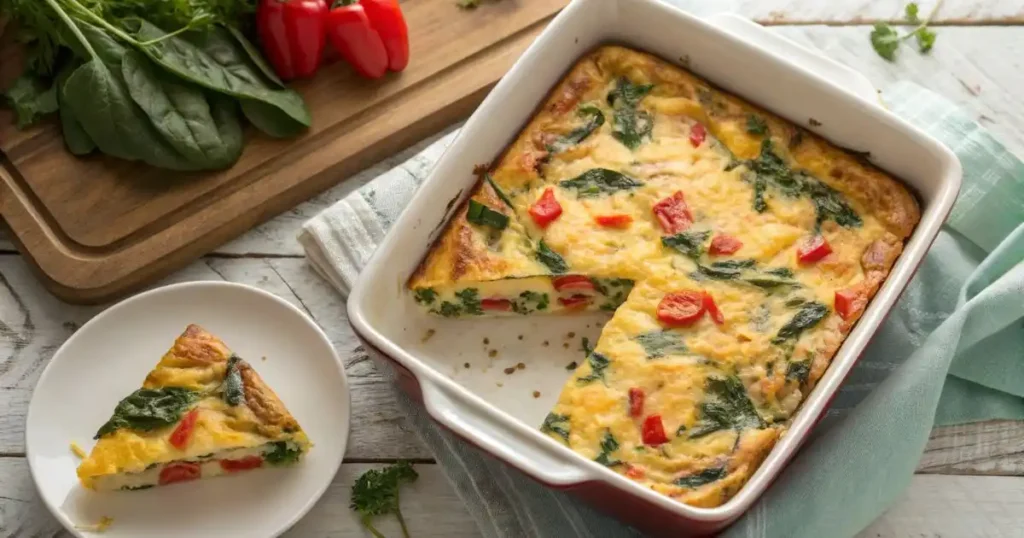
Preheat your oven to 375°F (190°C) and generously coat a 9×9-inch baking dish with olive oil or cooking spray. The secret that elevates this cottage cheese eggs bake above every other breakfast casserole you’ve attempted lies in a single preparatory step: blending the cottage cheese with the eggs before adding any other ingredients.
Transfer the cottage cheese and eggs into a blender or use an immersion blender directly in a deep mixing vessel. Process for 20–30 seconds until the curds have dissolved entirely into a smooth, uniformly pale custard base. This step eliminates any textural contrast from intact curds, producing a silky, quiche-like interior that slices cleanly and reheats without weeping excess moisture.
Fold the chopped spinach, bell pepper, garlic powder, and smoked paprika into the blended egg base, seasoning assertively with salt and pepper. Pour the entire mixture into the prepared baking dish and scatter half the shredded cheddar across the surface, letting it sink slightly into the liquid. Reserve the remaining cheddar for the final ten minutes of baking, adding it atop the casserole once the center has begun to set.
Bake uncovered for 30–35 minutes, until the center no longer quivers when the dish is gently nudged, and the exposed cheese on top has developed a burnished, amber-gold crust. Allow the casserole to rest for five minutes before cutting. This resting period allows the proteins to fully stabilize, ensuring clean, intact portions rather than a crumbling, steaming mess.
Meal-Prep Baked Cottage Cheese Egg Casserole
Ingredients
Casserole Base
- 8 large eggs
- 1 cup cottage cheese full-fat
- 2 cups fresh baby spinach roughly chopped
- 1 red bell pepper medium, finely diced
- 0.5 cup sharp cheddar cheese shredded, divided
- 0.5 tsp garlic powder
- 0.5 tsp smoked paprika
- salt to taste
- black pepper to taste
- olive oil or cooking spray for greasing
Instructions
- Preheat the oven to 190°C (375°F) and grease a 9×9-inch baking dish with olive oil or cooking spray.
- Combine the eggs and cottage cheese in a blender or deep bowl. Blend for 20–30 seconds until completely smooth and creamy.
- Transfer the mixture to a bowl and fold in the chopped spinach, diced red bell pepper, garlic powder, and smoked paprika. Season with salt and black pepper.
- Pour the mixture into the prepared baking dish and sprinkle half of the shredded cheddar cheese on top, allowing it to slightly sink into the mixture.
- Bake uncovered for 20–25 minutes, then add the remaining cheddar cheese on top.
- Continue baking for another 10 minutes, or until the center is set and the top is golden and slightly crisp.
- Remove from the oven and let the casserole rest for 5 minutes before slicing and serving.
Notes
4 Flavor Variations to Upgrade Your Breakfast
Once you’ve mastered the core technique, the real creative latitude opens up. These four variations each adapt beautifully to both the scrambled and baked methods.
1. The Mediterranean
Crumble salty feta liberally into the egg mixture and stir through a generous handful of oil-packed sun-dried tomatoes (roughly chopped) and fresh baby spinach wilted in olive oil. Finish with a scattering of dried oregano and a heavy drizzle of extra-virgin olive oil. The briny, tangy notes of the feta create a counterpoint to the dairy-rich cottage cheese base that feels surprisingly light and bright.
2. The Spicy Southwest
Fold thinly sliced fresh jalapeños and diced roasted poblano pepper into the egg mixture alongside a generous scoop of chunky tomato salsa (drained slightly to prevent excess liquid). Swap the cheddar for pepper jack and finish with fresh cilantro and a squeeze of lime. This variation rewards those who believe breakfast should wake you up rather than merely sustain you.
3. The Carnivore’s Dream
Render crumbled bacon and breakfast sausage in a skillet until deeply caramelized, draining the fat before folding the meat into the egg base. The rendered fat’s richness pairs with the cottage cheese’s lactic tang in a deeply savory combination. For the baked version, press the meat into the bottom of the dish to create a protein-dense foundation layer beneath the egg custard.
4. The Pesto & Parmesan Swirl
Dollop two to three tablespoons of basil pesto across the surface of the assembled casserole (or swirl through the scrambled eggs in the final thirty seconds of cooking) and finish with a snowfall of finely grated Parmigiano-Reggiano. The aromatic, oil-rich pesto creates marbled pockets of herbaceous intensity throughout the mild, dairy-forward egg base, a combination that tastes far more sophisticated than the five minutes it takes to assemble.
Meal Prep, Storage, and Reheating Rules
The cottage cheese egg bake is one of the most dependable meal-prep-friendly proteins you can keep in your refrigerator, provided you follow a few non-negotiable storage protocols.
Refrigerator storage: Allow the fully baked casserole to cool to room temperature before covering tightly with plastic wrap or transferring individual sliced portions into airtight glass containers. Stored correctly, the casserole maintains peak texture and flavor for up to five days in the refrigerator. The flavor actually deepens slightly after 24 hours as the herbs and vegetables infuse further into the egg base.
Freezer storage: The baked casserole freezes beautifully. Slice into individual portions, wrap each in plastic wrap, and store in a freezer-safe zip bag or container for up to three months. Do not attempt to freeze scrambled cottage cheese eggs; the delicate, steam-puffed curds collapse irreversibly upon freezing, producing a wet, dense, entirely unpleasant texture upon thawing.
Reheating without rubbery results: The enemy of reheated eggs is aggressive, rapid heat. For refrigerated portions, place a single slice on a microwave-safe plate, cover loosely with a damp paper towel to trap steam, and reheat at 50–60% power in 45-second intervals until just warmed through. For a superior result, reheat in a 325°F (163°C) oven for 8–10 minutes; the gentle, ambient heat brings the casserole back to life without tightening the proteins into a chewy, desiccated slab.
Frequently Asked Questions
Does it taste overwhelmingly like cottage cheese?
This is the concern that keeps most first-timers from making the leap, and the answer is a resounding no. Cottage cheese has a mild, lactic, faintly tangy flavor that, when cooked into eggs with butter and seasoning, completely melts into a rich, buttery, almost indistinguishable profile. What you are left with is not “eggs that taste like cottage cheese” but rather eggs that taste better than eggs, more rounded, more deeply savory, and undeniably richer without any identifiable dairy tang. The curds dissolve; only their textural and protein contributions remain in the finished dish.
Will the curds make my eggs watery?
Only if you rush the cooking process. The moisture that cottage cheese carries is precisely what makes these eggs so extraordinarily fluffy, but that same moisture must be given the opportunity to cook off gradually rather than pool in the pan. Cooking low and slow allows the liquid to evaporate progressively as the egg proteins set, resulting in a dry, cloud-soft curd rather than a wet, slippery one. If you encounter excess moisture in the pan, simply allow the eggs to rest on low heat for an additional 60–90 seconds before folding; the residual warmth will absorb the remaining liquid entirely.
Have you given our recipe a try ?
There are no reviews yet. Be the first one to write one.
Last Updated on March 25, 2026 by Janelle

- High-Protein Cottage Cheese Eggs (Scrambled & Baked Casserole) - March 25, 2026
- High-Protein Cottage Cheese Pizza Recipe (Crust & Bowl Methods) - March 23, 2026
- 6 Best Dipping Sauces for Cheese Sticks (Easy & Homemade) - March 16, 2026